Last Friday the cabinet published its vision on artificial intelligence, a 28-page letter with a hopeful title: Choosing AI for everyone. State Secretary Willemijn Aerdts, responsible for the digital economy and sovereignty, put the aim in one line: a Netherlands “in which AI makes everyone better and helps us forward”.
The plan rests on three ideas: build and use AI responsibly, make sure the country has access to advanced AI and stays safe, and steer the change by public values. In practice that means better public services and care, more AI literacy, help for workers whose jobs change, and protection of fundamental rights. Small businesses should find it easier to start, and government bodies will buy more AI together instead of one by one.
The geopolitics is the new part. The Netherlands does not want to depend on the United States or China alone. Beside Europe, the letter looks to “middle powers” such as Canada, Japan, Singapore and South Korea, while the country also stays in Pax Silica, a US-led partnership on chips and AI. The cabinet sets aside €120 million for a European AI project and is studying a Dutch AI safety institute, modelled on the British one; an advisory report is due in December. Five sectors get priority: care, energy, food, security and high-tech, where ASML is called a unique asset in the world’s AI chain.
Much is still to come. A plan for data centres and computing power follows early in 2027, possibly with an AI factory in Groningen, and citizens will be asked their views in 2027 and 2028. Not everyone is impressed. “This is a toothless tiger,” said Volt leader Laurens Dassen, whose motion for chatbot-free primary schools passed last week.
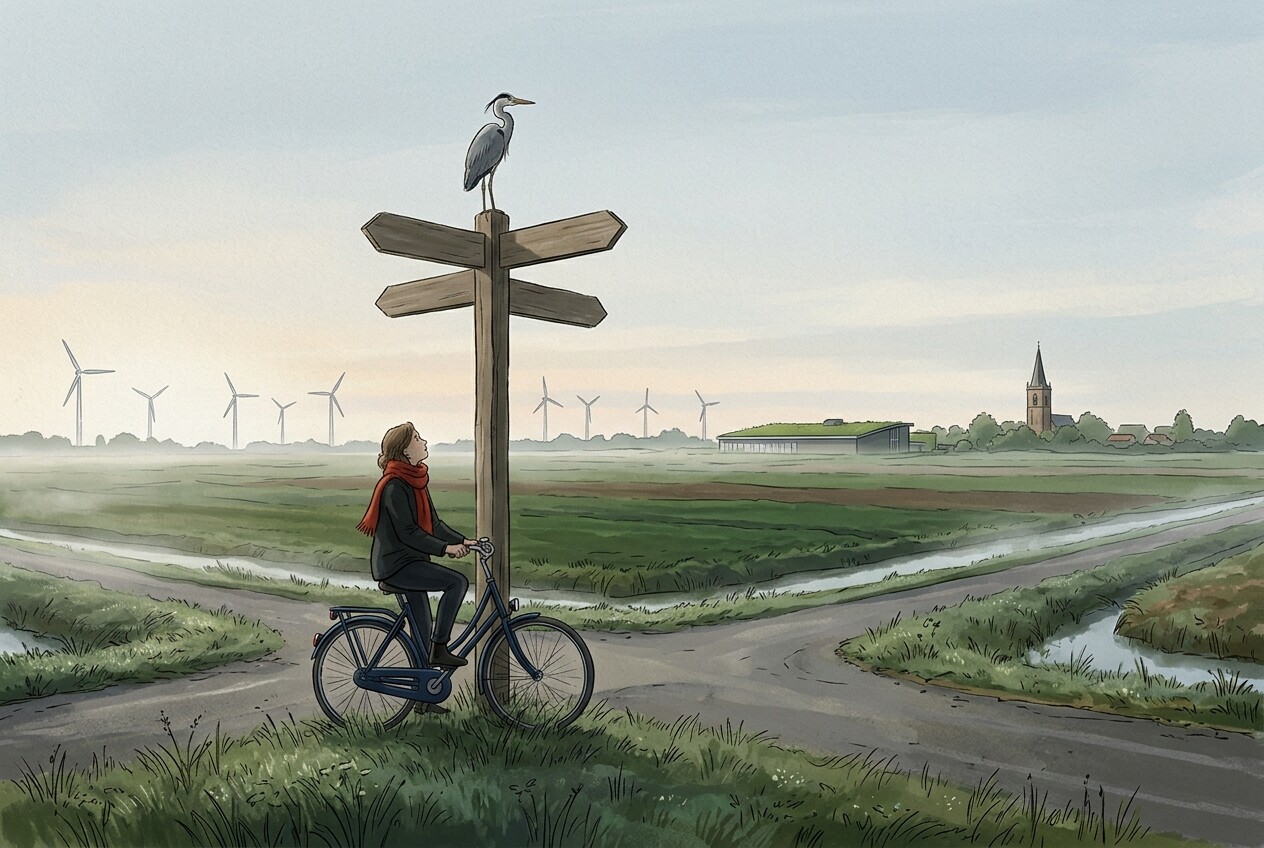
So this is a direction, not yet a destination. For now the most concrete AI rule in the Netherlands is the one about ten-year-olds and their homework.