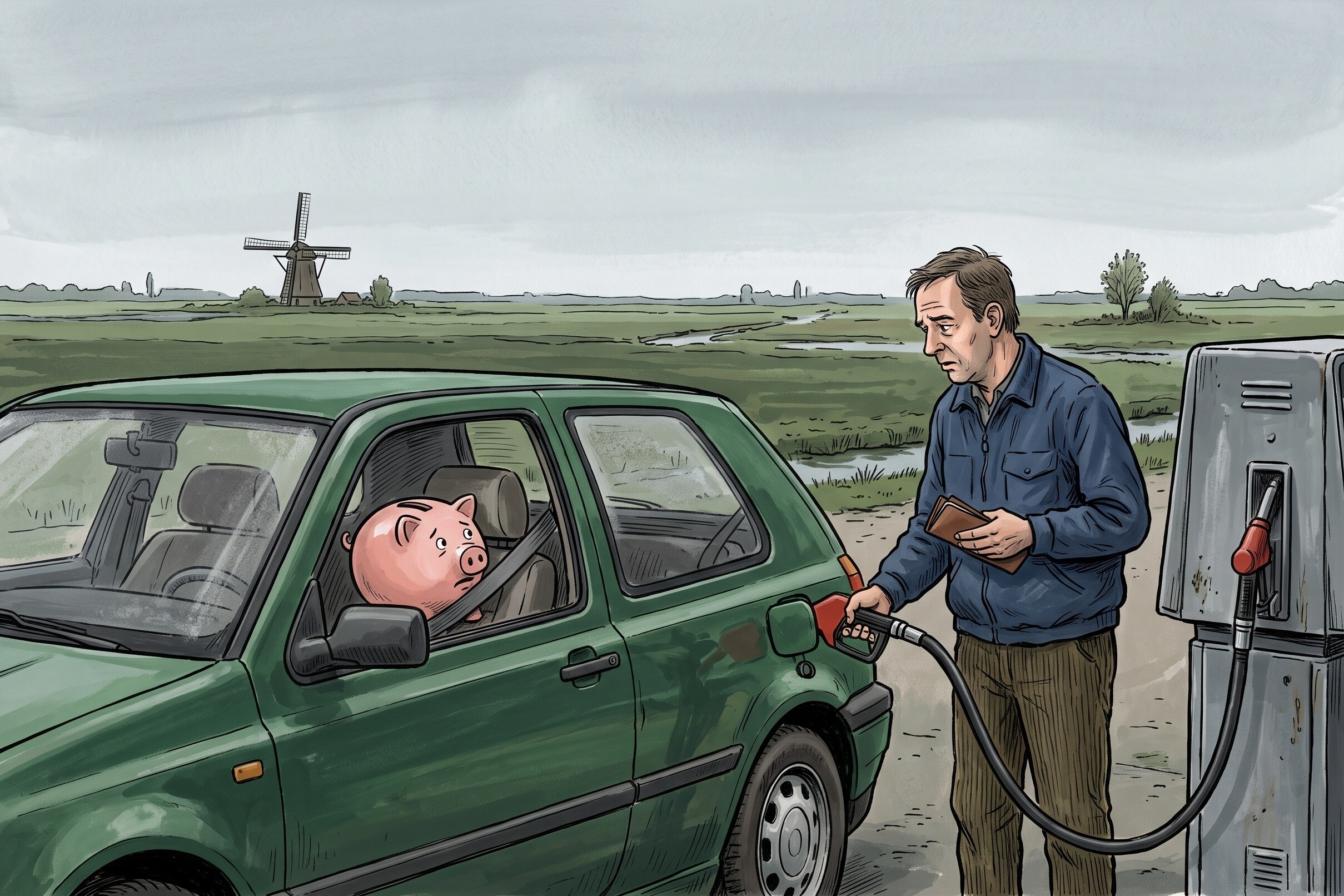
A full tank is a small shock again. Petrol in the Netherlands now costs on average €2.39 a litre at the pump, according to price tracker Tankwijzer on 7 October. In the first week of October last year it was €1.94. For a 50-litre tank that is about €119 instead of €97: some €22 more every time you fill up.
The number on the big boards is even higher. The advised price the oil companies publish, the GLA, stood at €2.70 on Wednesday, just below the record of €2.73 set on 28 September, UnitedConsumers reports. Hardly anyone pays that: unmanned and supermarket stations sit well below it, which is why the real average is lower.
Why so expensive? The competition authority ACM said on Monday that petrol is at its highest level since the war in Iran broke out at the end of February. Crude oil is only part of the story. Europe is short of refineries to turn oil into petrol and diesel, and relies heavily on imports. Since mid-September diesel has even cost more than petrol. Notably, ACM found no strong rise in the margins of the petrol stations themselves: the extra money is made earlier in the chain, at the oil fields and the refineries.
And the state? A large slice of every litre is tax: excise duty plus 21 percent VAT. In January, when prices were lower, that came to about two thirds of the pump price, NOS reported. Excise rose by 5.6 cents a litre on 1 January, while a temporary discount still keeps 18 to 19 cents off. Because excise is a fixed amount per litre, the tax share shrinks a little as oil gets dearer, though the VAT grows with it.
What helps? Compare before you fill up: ACM reckons choosing a cheaper station can save about €12.50 on a full tank. Living near a border pays: Germany averages €2.15 and Belgium €2.07. And a calm right foot costs nothing.