On Tuesday 6 October, Jon Stewart opened a Daily Show segment with a montage of AI leaders. The first fragment listed the rewards: cures for cancer and Alzheimer’s, an end to poverty, a fix for climate change. The next fragment gave the timing: one day, someday, soon. Then he asked what AI does today. A second montage answered: drone swarms, surveillance, cyberattacks, and prices that rise with demand. Someday AI will cure diseases, he concluded, but right now it is “mostly murder, surveillance, and surge pricing for the McRib.”
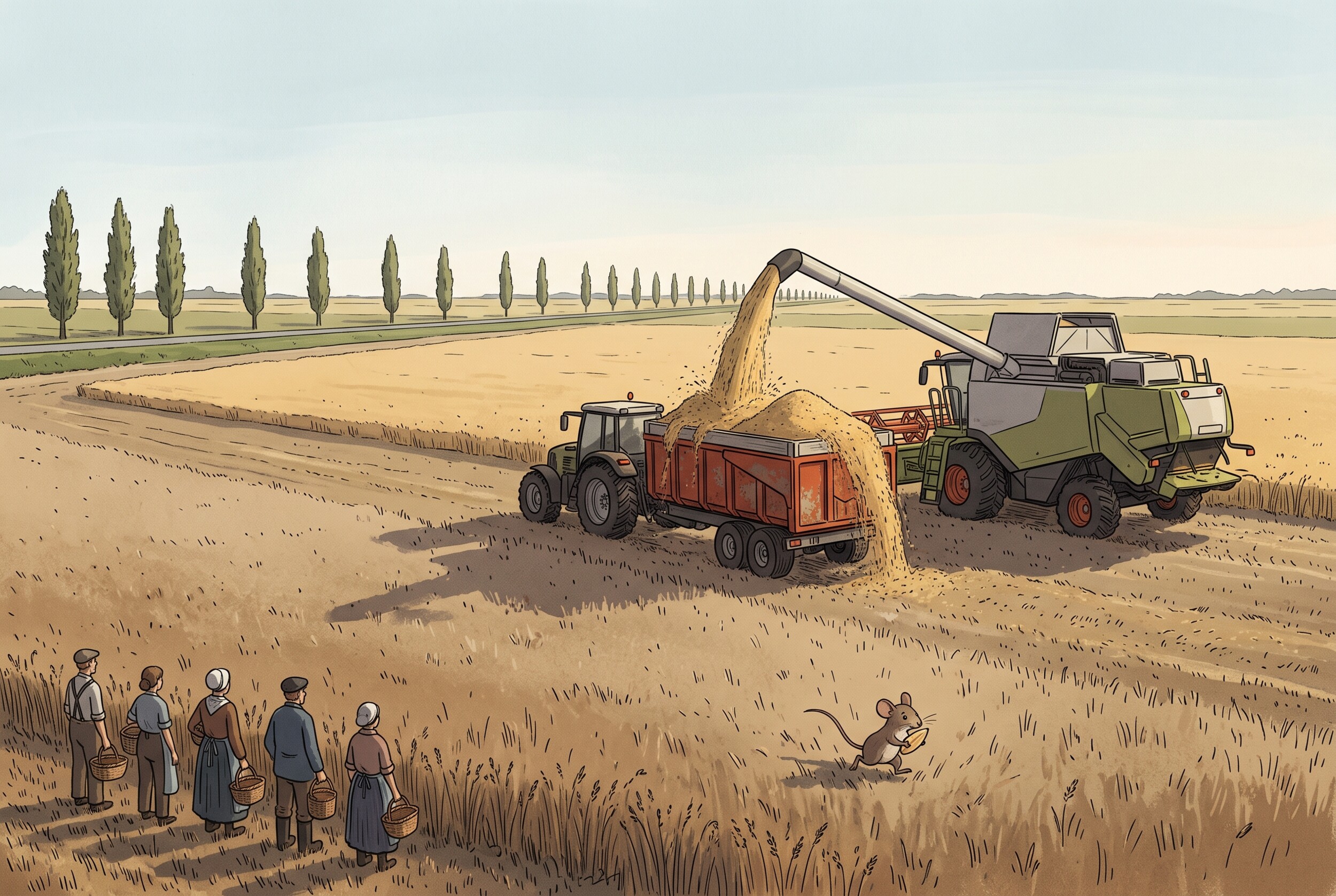
It is a joke, but it lands on a fair question. The industry asks us to accept real risks now for benefits promised later. What do we get in exchange, and when?
The record backs most of the montage, with a warning. Anthropic’s Dario Amodei has put the chance that AI goes catastrophically wrong at 10 to 25 percent, a personal estimate rather than a measurement. ICE pays Palantir 30 million dollars for ImmigrationOS, a platform that tracks immigrants’ movements. Anthropic itself reported a state-sponsored espionage campaign run largely by its own coding tool. Only the McRib needs an asterisk: McDonald’s denies dynamic pricing, and Reuters could not confirm that an AI tool caused the price gap it found.
For most people, income still arrives through work. If AI takes a growing share of that work, across clerks, coders and helpdesks at once, the link between effort and payoff loosens. The proposed answers range widely: a basic income paid from automation’s gains, a public stake in models trained on everyone’s writing, common ownership, or simply building so much, so cheaply, that competition does the sharing. Sceptics such as Cory Doctorow doubt the plenty is coming at all; market economists reply that every earlier wave of automation found new work.
Both camps agree the endgame is not written yet. So perhaps the better test is not how much the machines produce, but whether they give back what is truly scarce: time, attention, a sense that our work matters. The question is not whether the machines will be clever. It is whether we will be clear about what we want in return.