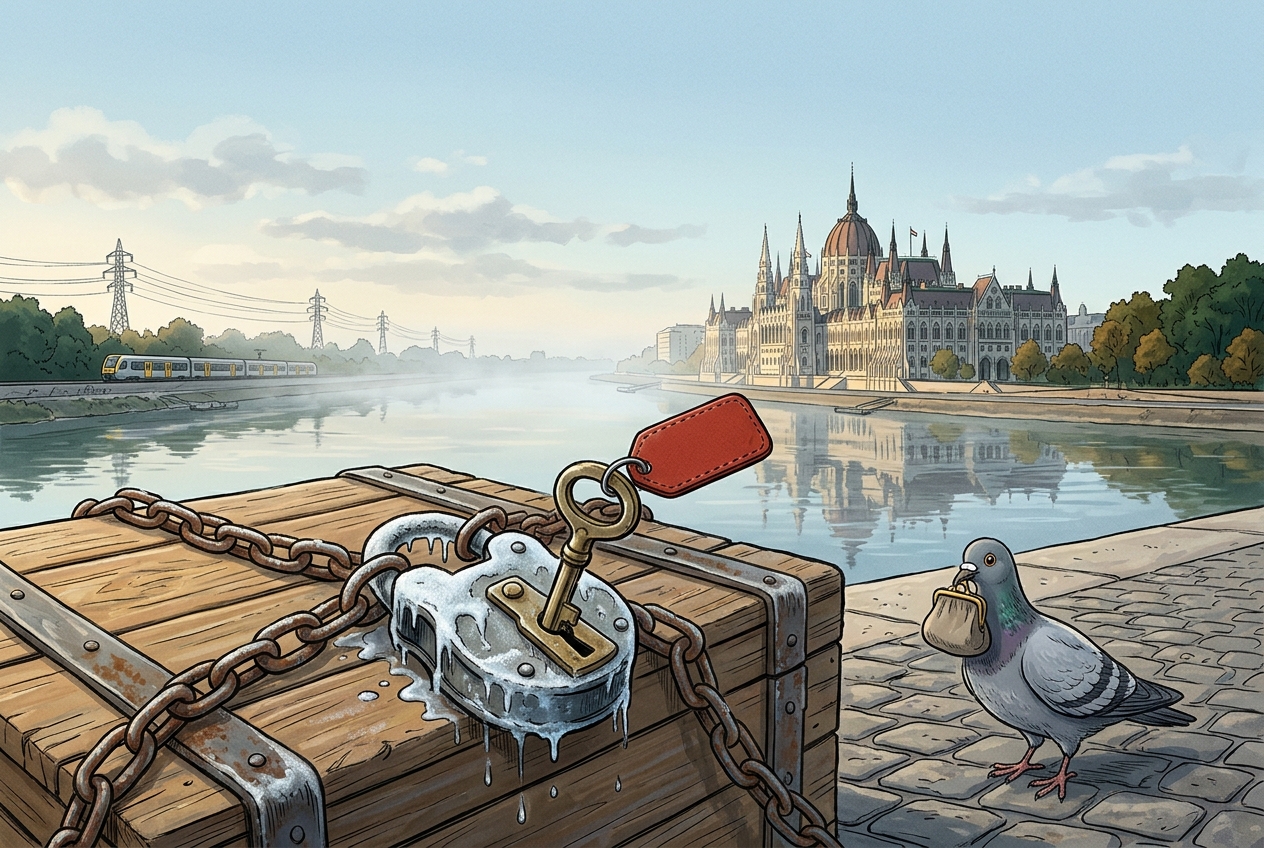
For years, Hungary’s share of the EU’s post-pandemic recovery fund sat in a freezer in Brussels. The European Commission would not pay while it doubted the independence of Hungarian courts and the fight against corruption under Viktor Orbán. This month the freezer door is opening. Commission officials told Euronews last week that they had found no major obstacles to approving almost all of Hungary’s roughly €10 billion before the end of November. As this issue went out on Friday 20 November, no formal decision had been announced.
What changed is the government. Péter Magyar won a landslide in April, and in May he and Commission President Ursula von der Leyen agreed to release €16.4 billion of withheld EU money, about €10 billion of it from the recovery fund. Over the summer the Hungarian parliament amended more than a hundred laws, mostly on the courts and anti-corruption, to meet 27 so-called super milestones and more than a hundred smaller ones. Budapest said in late August that it had met every condition.
A clock is running. The Recovery and Resilience Facility ends this year: all payments must be authorised by the end of November and paid before the year is out. After the Commission’s green light, the member states still have to agree.
More than a third of the money, €3.6 billion, goes into capital for the Hungarian Development Bank and a new state-owned rolling stock company. The rest is for the power grid, railways and rental housing.
Not everything is unlocked. Of the EU’s cohesion funds, €4.2 billion was released in September, but €2.2 billion stays blocked over academic freedom and LGBTI+ rights, for which Hungary has not yet sent evidence.
For the rest of the EU, the Netherlands included, which helps repay the joint borrowing behind this fund, the lesson is a plain one: conditions on European money can work, though they work slowly.