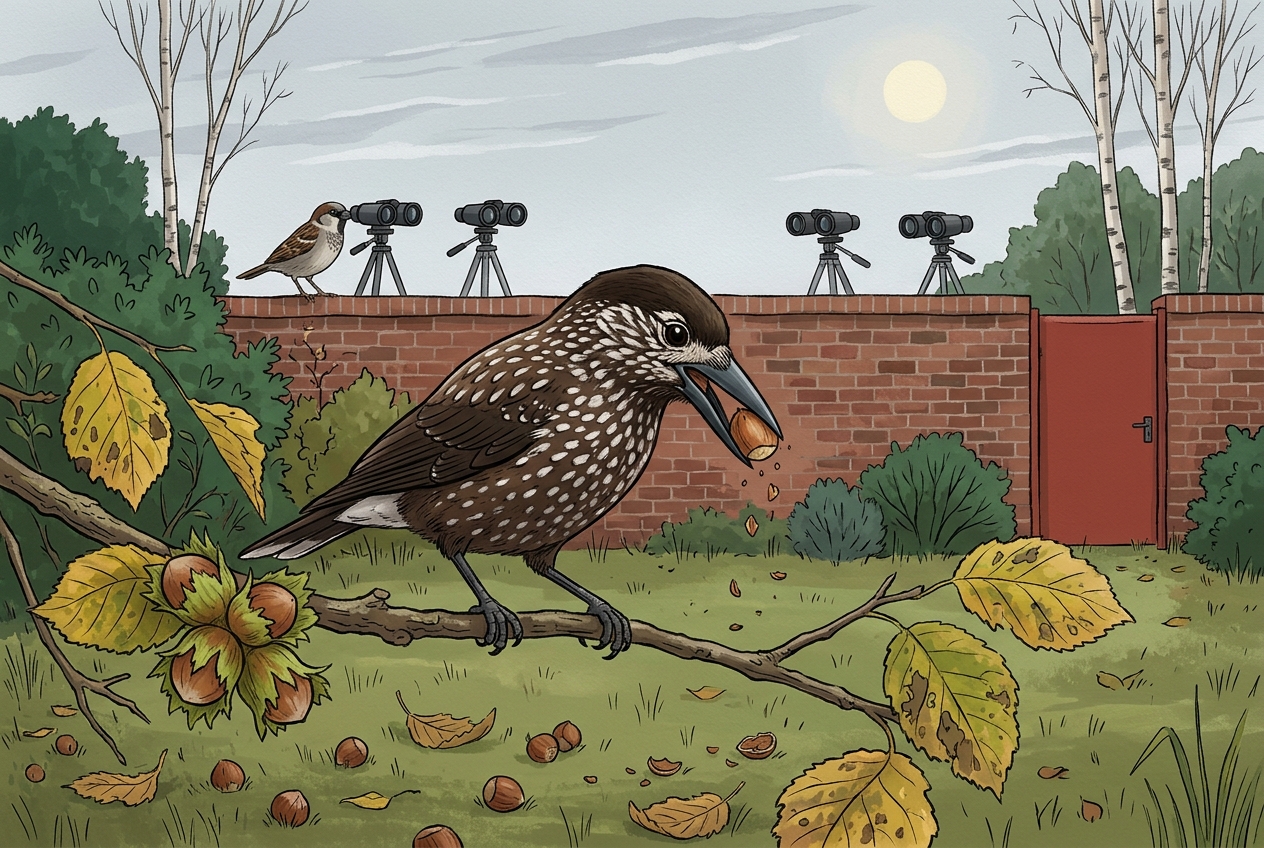
Most autumns, a Dutch birdwatcher can wait a lifetime for a nutcracker. This autumn, the bird came looking for them. As the migration season winds down, bird counter Marc Dijksterhuis summed it up on NPO Radio 1’s Vroege Vogels: an invasion of nutcrackers, and disappointing numbers of thrushes and finches.
The nutcracker (notenkraker) belongs to the crow family, with the shape of a jay and the colours of a starling: chocolate brown, sprinkled with white spots. It lives in the conifer forests of the far north-east, where it eats conifer seeds and hazelnuts, which it can crack in its beak. When a good breeding year meets a poor seed harvest, large numbers set off west in search of food. Most arrive in October and November, and many never fly back.
Invasions are rare. The big one in living memory came in 1968, when an estimated 5,000 to 10,000 nutcrackers reached the Netherlands, according to Sovon. In October the first birds turned up in several places, and Vroege Vogels asked whether another invasion was coming. This month’s autumn balance gave the answer: judging by reports on Waarneming.nl, Dijksterhuis estimates that 500 to 1,000 nutcrackers are in the country right now. Fewer than in 1968, but Dutch Birding calls it the biggest invasion since then.
The thrushes and finches had a thinner season, about 20 percent fewer than normal, a reminder that a good year for one species can be a quiet one for another.
If you see a brown, white-speckled crow hammering at a hazelnut this weekend, take a good look. The last time this happened on a large scale was more than half a century ago.