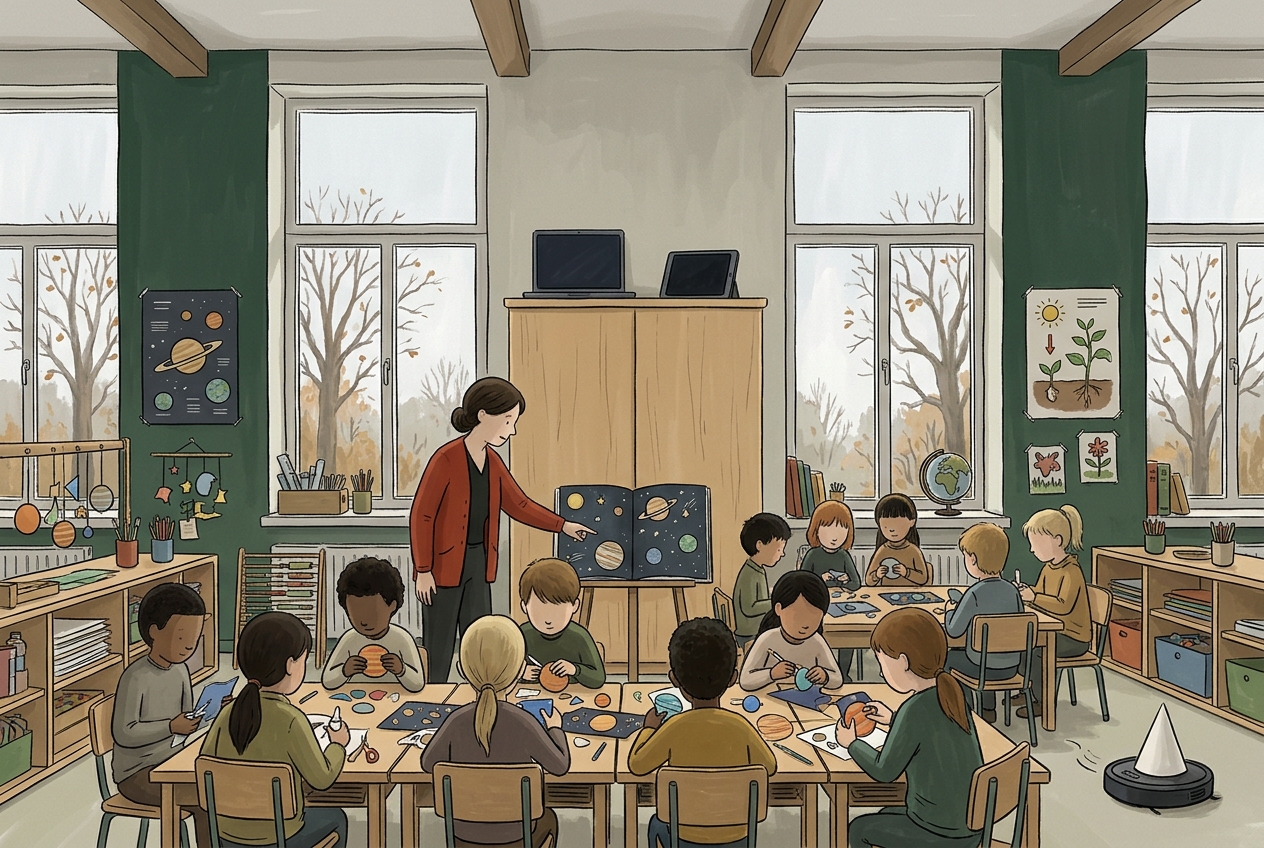
On Tuesday the Tweede Kamer did something no Dutch parliament had done before: it asked the government to keep a whole age group away from a technology at school. A motion by Volt leader Laurens Dassen, co-signed by MPs from nine other parties, from CDA and D66 to JA21, SP and DENK, won a majority. It asks the cabinet to build into its school digitalisation plan “a ban on the use of generative AI by pupils in primary education”. Think ChatGPT and Gemini: the tools that write the essay, answer the question and do the worksheet.
The reasoning is short. “Young pupils develop their critical thinking skills, creativity, and imagination to a significant extent in primary school,” the motion says. “The use of generative AI poses a risk to this development.” Dassen puts it more bluntly: “We must not make the same mistake we made when social media was embraced uncritically.” CDA’s Etkin Armut adds: “We believe learning from books should remain the foundation.”
The ban is narrower than it sounds. Schools may still teach about AI, and the draft new curriculum already says pupils should learn to deal responsibly with an AI system. Teachers are not covered: Dassen sees room for AI in lesson preparation. A teacher who shows the class two chatbot answers and lets the children judge them would, as the motion reads, be fine.
Not everyone was pleased. State Secretary Judith Tielen advised against the motion and asked Dassen to wait for her plans in December; he declined. The PO-Raad, which speaks for primary schools, said it was taken aback by a full ban that “came out of the blue”, while agreeing that frequent use by pupils seems to lower learning results and that “something needs to be done”. Norway already restricts generative AI in primary school almost completely.
A motion is a request, not a law. There is no start date, no list of what counts as generative AI, and no idea yet of how anyone would check a ten-year-old’s homework for a chatbot’s fingerprints. What has changed this week is the direction: after years of putting screens into classrooms, parliament has asked for one to be taken out. The cabinet now has to say how, or why not.