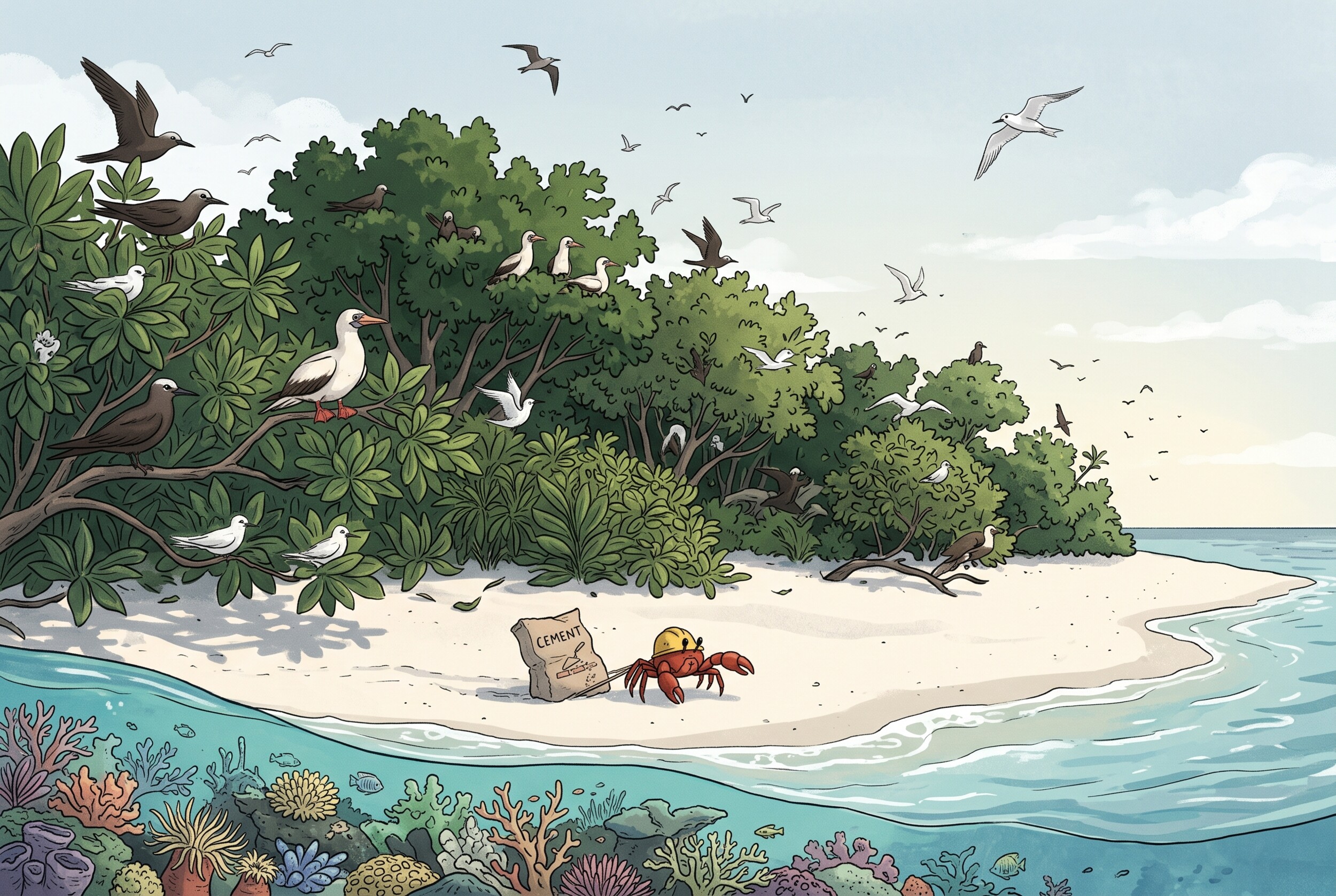
Atolls are rings of low coral islands, often only a metre or two above the waves. As the sea rises, they look like the first places that will disappear. But a study published this week suggests that some of them can fight back, with a little help from the birds.
Researchers led by Lancaster University studied 28 islands in the Seychelles, the Chagos Archipelago and Tetiaroa in French Polynesia. On some islands rats had been introduced; others were rat-free and full of nesting seabirds.
The difference was striking. Seabird droppings are rich in nitrogen, which washes into the sea and feeds the reef. Reefs next to rat-free islands grew 1.8 times faster on the lagoon side and 2.5 times faster on the ocean side. They also produced two to three times as much sediment: the sand that islands are made of. On land, native trees and shrubs help hold that new sand in place.
“Atoll islands are not static, they are naturally active systems that can change and adapt,” said lead author Nick Graham. Healthy reefs keep making sand, and islands keep rebuilding.
The lesson is practical. Removing rats and replanting native vegetation is cheap compared with sea walls, and it has worked on islands before. It will not stop the sea from rising. But it may give some islands time.